
Have you recently remembered someone from your family who is no longer with you? Perhaps an old photograph caught your attention, a childhood memory suddenly returned, or you found yourself thinking about your grandparents without any particular reason.
During Shradh and Pitru Paksha, such moments can feel especially meaningful.
In Tarot, ancestral themes are often explored through cards connected with family roots, emotional healing, memories and generational wisdom.
But what if one card could help you reflect on the message your family history may hold for your present life?
Today, we invite you to try a simple Pitru Paksha Tarot reading.
Take a deep breath, think about your ancestors, and choose one card from the three options below.
Card 1 — The Empress 🌿
Card 2 — Six of Cups 🕊️
Card 3 — The Star ✨
Don't overthink your choice. Select the card that naturally attracts your attention.
This is a symbolic Tarot reflection for spiritual insight and self-understanding, not a guaranteed message from deceased relatives.
Why Is Ancestral Tarot Meaningful During Pitru Paksha?
Pitru Paksha is traditionally a period dedicated to remembering ancestors through Shraddha, Tarpan, prayers and acts of charity.
In Tarot, ancestral themes can be explored through symbols of family, emotional inheritance, memory and healing.
A Tarot reading during Shradh can encourage you to ask:
-
What values did my ancestors pass down to me?
-
Is there an old family pattern I need to understand?
-
What lessons from my childhood still influence my decisions?
-
How can I honour my family without carrying every past burden?
-
What positive quality can I pass to the next generation?
Rather than predicting what a deceased person is literally saying, Tarot can help you explore these questions through symbolic interpretation.
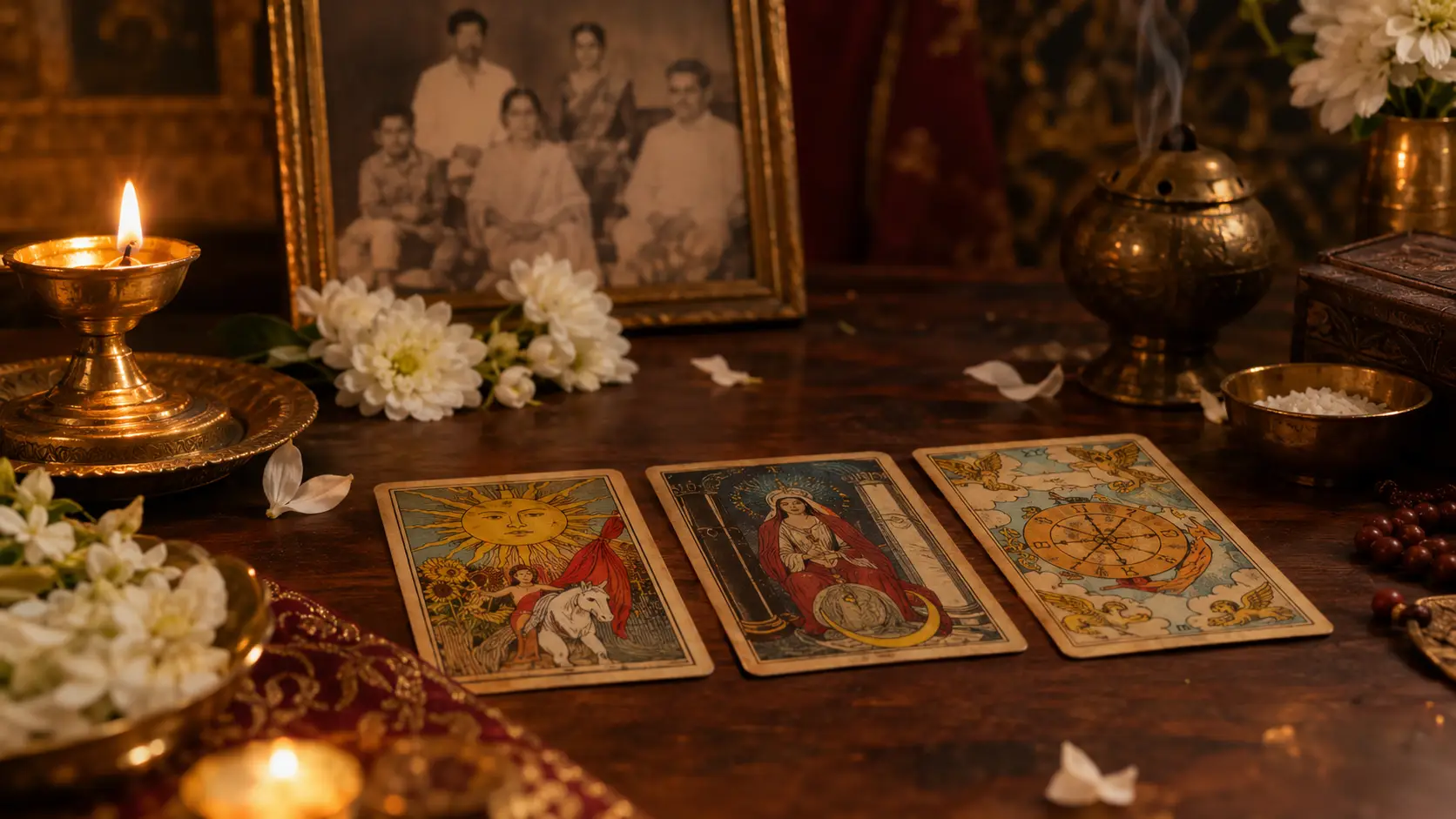
Now, let's discover your selected card.
Pick a Card: What Is Your Ancestral Message?
Choose the card that attracted you first.
If you selected Card 1, read The Empress.
If you selected Card 2, read Six of Cups.
If you selected Card 3, read The Star.
Card 1: The Empress — Your Roots Are Your Strength
Theme: Family, nurturing and abundance
If you selected The Empress, your symbolic ancestral message is about remembering the strength that comes from your roots.
This card is associated with motherhood, nurturing, fertility, care and the natural cycle of growth.
During Pitru Paksha, it invites you to reflect on the women and caregivers in your family who may have quietly held everyone together.
Perhaps someone in your family sacrificed personal dreams for the happiness of others. Perhaps your grandparents taught you the value of patience, food, hospitality or caring for relatives.
What this card may mean for you this week
1. Don't underestimate your own strength.
You may be carrying qualities that were developed through generations of hard work, resilience and care.
2. Give attention to family relationships.
A simple phone call, shared meal or peaceful conversation may help you reconnect with someone important.
3. Create abundance through gratitude.
Instead of focusing only on what is missing, recognise the support, skills and values already present in your life.
Your reflection
Ask yourself:
“What positive quality did my ancestors pass on to me that I should nurture now?”
Small spiritual practice
During Shradh, you may offer flowers or food according to your family tradition. You can also donate food to someone in need in remembrance of your ancestors.
The Empress reminds you: Your roots are not only your past; they are also part of what helps you grow.
Card 2: Six of Cups — An Old Memory Needs Your Attention
Theme: Memories, childhood and emotional healing
If you selected Six of Cups, your symbolic message centres on memories and emotional connections.
This card is closely associated with childhood, nostalgia, innocence, kindness and the past.
During Pitru Paksha, it can encourage you to revisit the beautiful lessons you received from older generations.
Maybe you remember your grandmother's cooking, your grandfather's advice, or a family tradition that slowly disappeared.
But this card also asks an important question:
Are you holding on to a memory with love, or are you allowing an old hurt to control your present?
What this card may mean for you this week
1. Reconnect with a meaningful memory.
Look through an old family photograph or remember a moment that made you feel safe and loved.
2. Release unnecessary guilt.
If there are unresolved feelings connected with someone who has passed away, give yourself permission to process them gently.
3. Preserve a family tradition.
A recipe, story, prayer or act of kindness can become a beautiful way to keep family memories alive.
Your reflection
Ask yourself:
“Which memory from my family deserves to be remembered with love rather than pain?”
Small spiritual practice
Write down one positive lesson you learned from an elder in your family. Keep it somewhere meaningful or share it with a younger family member.
Six of Cups reminds you: You cannot change the past, but you can choose which lessons you carry forward.
Card 3: The Star — Healing and Hope for the Next Generation
Theme: Healing, faith and renewal
If you selected The Star, your symbolic ancestral message is about hope.
The Star is traditionally associated with renewal, emotional recovery, inspiration and faith after difficult experiences.
In an ancestral Tarot reading, it can represent the opportunity to transform old family struggles into wisdom for the future.
Perhaps your family has experienced financial hardship, emotional distance, migration, loss or difficult circumstances.
This card invites you to consider that your future does not have to repeat every pattern from your past.
What this card may mean for you this week
1. Give yourself permission to heal.
You are allowed to build a peaceful life even if previous generations experienced hardship.
2. Break an unhelpful pattern.
If a family habit is affecting your relationships, confidence or financial decisions, begin with one small change.
3. Become a source of hope.
Your actions today may create a healthier emotional environment for the people who come after you.
Your reflection
Ask yourself:
“What is one family pattern I can transform into something healthier?”
Small spiritual practice
Light a diya or spend a few quiet moments in prayer according to your personal tradition. Offer gratitude for the people who came before you and set one positive intention for your family.
The Star reminds you: You can honour your ancestors while creating a different future.
What If You Didn't Feel Connected to Any Card?
That is completely fine.
Tarot is a symbolic reflection tool. You do not need to experience a special feeling, dream or sign for the reading to be meaningful.
You can simply choose the card whose message resonates with your current situation.
During Pitru Paksha, the deeper purpose is remembrance, gratitude and reflection.
3 Questions to Ask Yourself During Ancestral Tarot Reading
Whether you chose The Empress, Six of Cups or The Star, these three questions can help you explore your family history more deeply.
| Reflection Question | What It Helps You Explore |
|---|---|
| What positive quality did I inherit from my family? | Strength and identity |
| Which old emotional pattern should I understand better? | Personal growth |
| What value do I want to pass to the next generation? | Family legacy |
These questions can be especially meaningful if you are currently navigating relationships, career decisions or changes in your personal life.
Pitru Paksha Tarot Reading: Is It a Real Message From Ancestors?
Many spiritual traditions believe in ancestral blessings and the importance of remembering departed family members.
Tarot, however, does not provide a verifiable way to establish that a deceased relative is communicating through a card.
Instead, a Pitru Paksha Tarot reading can be used as a symbolic practice to explore memories, emotions, family values and personal intentions.
If a card brings up sadness or unresolved grief, you do not need to interpret it as a warning or negative spiritual sign.
You can simply use the experience as an opportunity for reflection, prayer or a conversation with someone you trust.
A Simple Ancestral Gratitude Ritual for This Week
If your selected card inspired you, try this gentle practice.
Step 1: Sit quietly for a few minutes.
Step 2: Remember one ancestor or elder who positively influenced your life.
Step 3: Think of one lesson you received from that person.
Step 4: Offer a prayer or perform a traditional Pitru Paksha observance according to your family customs.
Step 5: Do one kind act in their memory.
It could be donating food, helping an elderly person, supporting a family member or sharing a meaningful family story.
The purpose is not to seek a supernatural sign, but to turn remembrance into a positive action.
Final Message: The Past Can Guide You, But It Does Not Have to Control You
During Pitru Paksha, we remember those whose lives helped shape our own.
Sometimes, the most meaningful ancestral message is not a prediction about the future.
It is a reminder to be kinder, live with greater awareness, preserve meaningful traditions and create a healthier path for the next generation.
Whether you selected The Empress, Six of Cups or The Star, take one positive lesson from your reading.
Your ancestors are part of your story. What you choose to do with that story belongs to you.
