Mahalaya 2026 falls on Saturday, October 10, marking an important transition from Pitru Paksha towards the festive season of Shardiya Navratri. Just one day later, on Sunday, October 11, Navratri begins with Ghatasthapana.
If you want to prepare your home spiritually for Shardiya Navratri 2026, there is one simple traditional practice you can do on Mahalaya:
Clean one dedicated space in your home, prepare it as a peaceful place for Maa Durga, light a diya and offer a sincere prayer for strength, peace and prosperity before Navratri begins.
This is not about performing an expensive ritual.
It is about cleansing, creating a sacred space and beginning Navratri with a focused mind.
According to the 2026 Panchang, Mahalaya falls on October 10, while Ghatasthapana and the first day of Shardiya Navratri fall on October 11.
Mahalaya 2026 Date: When Is It?
Mahalaya 2026: Saturday, October 10, 2026
Shardiya Navratri 2026 begins: Sunday, October 11, 2026
Ghatasthapana in Kolkata: October 11, approximately 5:31 AM to 9:26 AM according to the cited Kolkata Panchang.
Mahalaya is associated with the final day of Pitru Paksha, Sarva Pitru Amavasya, and is particularly significant in Bengali tradition as the day associated with the beginning of the Durga Puja season. Panchang sources list October 10 as Mahalaya and Sarva Pitru Amavasya in 2026.
This makes October 10 an especially meaningful day to finish the ancestral remembrance period and prepare the home for the upcoming Devi festivities.
The 1 Mahalaya Remedy to Do Before Navratri
If you want to follow just one simple Shardiya Navratri 2026 remedy, do this:
Clean one corner of your home completely and turn it into a dedicated Maa Durga prayer space.
Do it on Mahalaya, October 10.
Start by cleaning the chosen space thoroughly.
Remove:
-
Dust
-
Broken objects
-
Unused decorations
-
Dead or completely dried plants
-
Clutter
-
Torn or damaged religious items
Then clean the floor and surrounding area.
Place a clean cloth or simple altar setup.
You can place:
-
A Maa Durga image or idol
-
A diya
-
Fresh flowers
-
A small kalash if your family tradition uses one
-
Incense
-
Fruits or simple prasad
Then sit quietly for a few minutes.
Light the diya and pray:
“Maa Durga, give my family strength, wisdom, peace and courage. May this Navratri bring positive energy, discipline and devotion into our home.”
You do not need an elaborate mantra if you are not familiar with one.
The important part is beginning the festival with cleanliness, sincerity and devotion.
Why Do This on Mahalaya?
There is a beautiful symbolic connection here.
Mahalaya marks the end of the Pitru Paksha period and comes immediately before Shardiya Navratri begins.
In the 2026 calendar, October 10 is Mahalaya, and October 11 is Navratri Day 1 with Ghatasthapana.
So you can think of the two days as a transition:
October 10 → remembrance and cleansing
October 11 → Devi worship and Navratri beginning
That makes Mahalaya a natural day to prepare your home.
What Should You Remove From the Puja Space on Mahalaya?
Before preparing your Navratri altar, take a close look at your existing mandir.
Remove anything that is:
1. Broken
Broken idols or damaged religious objects should not simply remain in the puja space.
Follow your family or local religious tradition for respectful disposal or replacement.
2. Extremely Dusty
Clean the altar, shelves, lamps and surrounding area.
A puja space should ideally be kept clean throughout the year.
3. Completely Dried
Remove completely dried flowers, leaves and decorations.
Fresh flowers can be used when available.
4. Unnecessary Clutter
Don't allow the altar to become a storage area.
Keep only what is genuinely used for worship.
Mahalaya Remedy for Home Peace
If your main intention is peace and positive energy at home, add one simple step after cleaning.
Sit with your family for a few minutes without phones or distractions.
Light a diya.
Remember your ancestors with gratitude.
Then offer a simple prayer to Maa Durga.
This creates a meaningful transition from Pitru Paksha remembrance to Devi worship.
Rather than treating Mahalaya as a day of fear, use it as a day to create a calmer environment.
Shardiya Navratri 2026 Start Date
This is one of the biggest questions people will search before the festival:
When does Shardiya Navratri start in 2026?
Shardiya Navratri begins on Sunday, October 11, 2026.
The first day is Pratipada, and the traditional beginning ritual is Ghatasthapana, also known as Kalash Sthapana.
For Kolkata, the cited Panchang gives:
Ghatasthapana Muhurat: 5:31 AM–9:26 AM
Abhijit Muhurat: 11:00 AM–11:47 AM
Because Muhurat can vary by location, readers should use their own city's Panchang rather than copying Kolkata timings.
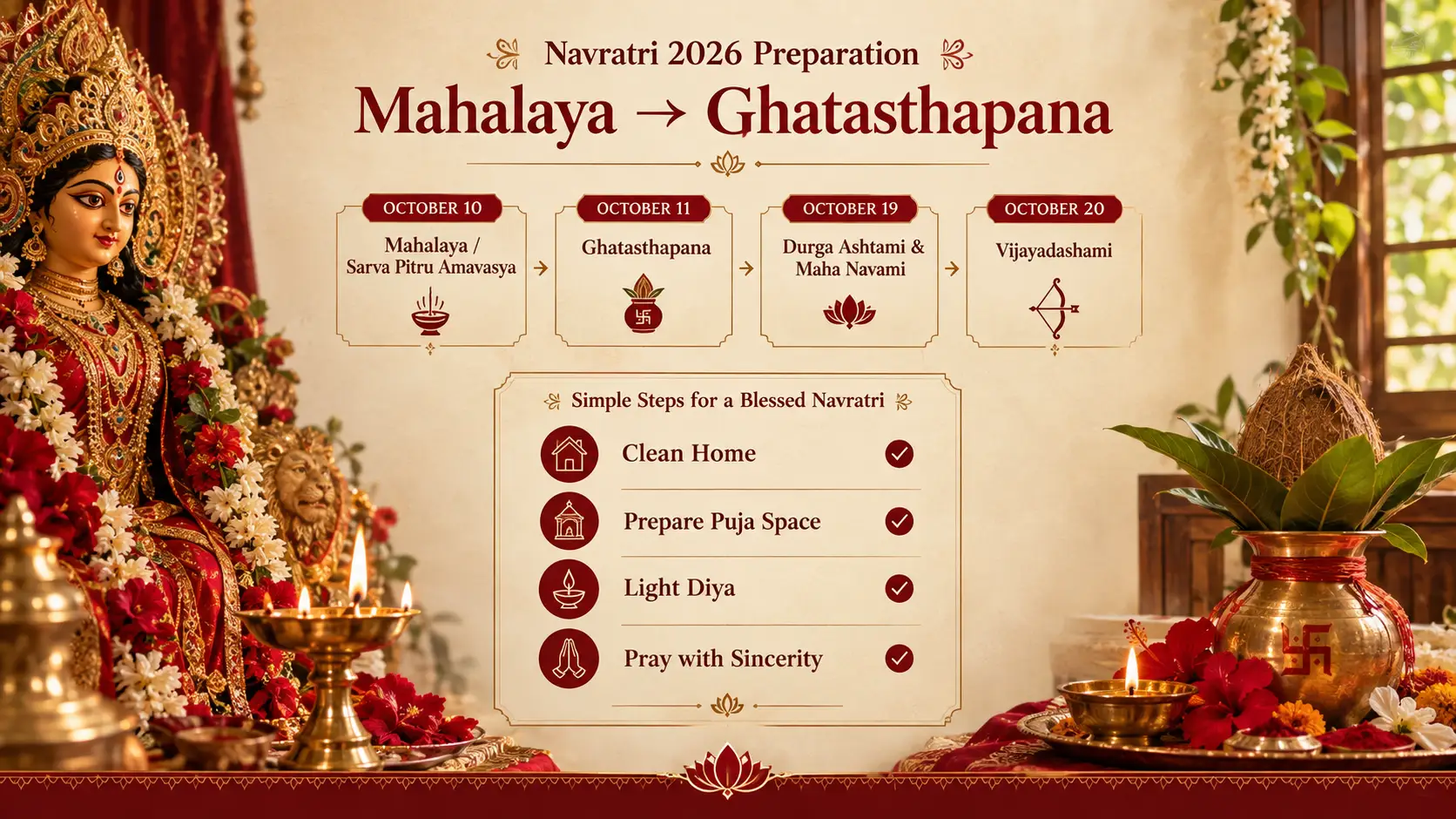
Shardiya Navratri 2026: Important Dates
| Date | Occasion |
|---|---|
| October 10 | Mahalaya / Sarva Pitru Amavasya |
| October 11 | Navratri Day 1 — Ghatasthapana |
| October 12 | Day 2 |
| October 13 | Day 3 |
| October 14 | Day 4 |
| October 15 | Day 5 |
| October 16 | Day 6 |
| October 17 | Day 7 |
| October 18 | Day 8 |
| October 19 | Day 9 — Durga Ashtami / Maha Navami |
| October 20 | Vijayadashami / Dussehra |
The cited 2026 Navratri calendar places Day 1 on October 11 and Vijayadashami on October 20.
5 Simple Navratri Remedies for 2026
If you want to do more than the Mahalaya preparation, these simple traditional practices can be included according to your family tradition.
1. Light a Diya Every Day
During Navratri, light a diya in your home prayer area.
A regular morning or evening prayer can help create a peaceful devotional routine.
2. Keep the Puja Space Clean
Don't allow flowers, food or other offerings to remain unattended for long periods.
Clean the space regularly.
3. Offer Fresh Flowers
Offer fresh flowers according to your family tradition.
Red flowers are commonly associated with Devi worship, although specific traditions differ.
4. Practice One Day of Charity
During Navratri, consider donating food, clothes or essential items to someone who needs them.
The purpose is to combine devotion with compassion.
5. Control Anger and Arguments
This may be the simplest remedy of all.
If Navratri is a period of Devi worship, make an effort to bring more patience into your home.
Less anger. More discipline. More gratitude.
A Special Remedy for Career and Money
Many readers search for Navratri remedies because they want better finances or career growth.
Instead of promising sudden wealth, try a simple symbolic practice.
On the first day of Navratri:
-
Clean your work desk.
-
Remove unnecessary papers.
-
Organise your business documents.
-
Keep your important financial records properly.
-
Light a diya at home.
-
Pray for wisdom and discipline.
-
Write down one realistic financial goal for the next nine days.
For example:
“I will reduce one unnecessary expense.”
Or:
“I will contact five potential customers.”
Or:
“I will complete one delayed project.”
This combines a traditional spiritual practice with a practical action.
Can You Perform Navratri Remedies Without Fasting?
Yes.
Fasting practices vary significantly among families and traditions.
You do not need to assume that everyone must follow the same fasting rules.
If you cannot fast because of your circumstances, you can still observe Navratri through:
-
Prayer
-
Meditation
-
Reading devotional texts
-
Charity
-
Visiting a temple
-
Maintaining cleanliness
-
Offering flowers
-
Lighting a diya
-
Practising self-discipline
The form of observance can follow your family tradition.
Can You Start a New Work During Navratri?
Many people consider Navratri an auspicious period for beginning something meaningful.
However, the exact customs vary.
If you are planning:
-
A new business
-
A shop opening
-
A major purchase
-
A new job
-
A property decision
-
A wedding-related ceremony
check your local Panchang and family tradition for an appropriate Muhurat if that matters to you.
There is no need to believe that every ordinary activity outside a specific Muhurat is automatically harmful.
What Should You Avoid During Navratri?
Instead of making a long list of frightening restrictions, focus on a few practical principles:
Avoid unnecessary negativity.
Try not to turn the festival into constant arguments or anger.
Avoid disrespect toward others.
Devotion should ideally be accompanied by respectful behaviour.
Avoid wasting food.
If you prepare prasad or offerings, handle them respectfully.
Avoid careless rituals.
If you are performing a specific traditional ritual for the first time, learn the correct procedure rather than improvising important steps.
Avoid fear-based claims.
No remedy should be marketed as a guaranteed method to make someone rich, solve every family problem or change their destiny overnight.
Mahalaya to Navratri: A Simple 2-Day Preparation Plan
October 10 — Mahalaya
Morning
-
Clean the home.
-
Complete any Pitru Paksha observance according to family tradition.
-
Remove unnecessary clutter.
Evening
-
Prepare the Maa Durga prayer space.
-
Clean the diya and puja items.
-
Arrange flowers and other offerings.
-
Spend a few quiet minutes in prayer.
October 11 — Navratri Day 1
-
Wake up early.
-
Take a bath and wear clean clothes.
-
Perform Ghatasthapana according to your tradition.
-
Begin Navratri worship.
-
Keep the home peaceful and clean.
This simple preparation can make the beginning of Navratri feel much more intentional.
Final Thought
Mahalaya is not just the day before Navratri. It can be treated as a day of preparation.
Before welcoming the festive energy of Shardiya Navratri, clean your home.
Clear the clutter.
Complete your ancestral observances.
Prepare one peaceful space for Maa Durga.
Then, on October 11, begin Navratri with a clean environment and a focused mind.
The one thing to do on Mahalaya is simple: prepare your home as if you are preparing your mind for a new beginning.
Because the most meaningful Navratri remedy does not need to be expensive or complicated.
Clean space. Pure intention. Sincere prayer.
That is where your Navratri 2026 preparation can begin.
